
Audio player docked to bottom
Listen to this article
A high water result or a depressed breakdown voltage raises the drying question. Here is how to decide whether your transformer needs drying — and the honest limit of what drying can restore.
❗ Important
Drying removes water from the insulation; it does not make the transformer younger. Most of the water in an oil-paper transformer sits in the paper, not the oil, so an oil-only treatment reads as a quick win that partly reverses over the following weeks. Real drying — the kind that targets the paper — halts the water-driven ageing of the cellulose, restores dielectric margin, and raises the temperature at which the unit can safely be overloaded. What it cannot do is undo the ageing that has already happened. The decision is therefore a value judgment: dry when the paper is genuinely wet and the asset is worth the extra service life you are buying.
The Trigger, and What It Actually Tells You
Two lab results start this conversation more often than any others: a water content that has crept up over successive samples, and a breakdown voltage (BDV) that has fallen. Both are real signals, but neither is, on its own, a verdict on the insulation.
A single water number in parts per million is the weakest of the two, because how much water the oil holds depends heavily on temperature — the same insulation reads very differently on a warm afternoon and a cold morning. This is why relative saturation, not bare ppm, is the number worth trending; we cover that distinction in its own article and will not repeat it here. The point for the drying decision is simpler: a water result is a symptom, and the reservoir it is a symptom of lives elsewhere.
A depressed BDV is more directly alarming, because dielectric strength is what a transformer is for. But BDV falls for more than one reason — free water and particles are the usual culprits — and a low value tells you the oil's condition today, not how much water is bound up in the paper. Treat both results as prompts to ask the real question, not as the answer to it.
Drying the Oil Is Not Drying the Transformer
This is the single fact that governs every drying decision. In an oil-paper transformer the water is split roughly 95 to 5 in favour of the paper. The oil you sample holds only a few percent of the total; the rest is held in the cellulose — the thin turn insulation and the thick structural pressboard.
That split has a consequence people are caught out by again and again. Circulate the oil through a dehydration plant and its water content drops within hours. Sample it the next day and the number looks excellent. But the paper has not moved. Over the following days and weeks the paper re-equilibrates outward into the freshly dried oil, and the oil number climbs back toward where it started. This is moisture rebound, and it is well documented: after a single pass the oil looks improved, but if the solid insulation is still wet the water diffuses back into the oil within a short period. IEC 60422 says as much, and recommends following up with an oil sample a few months after treatment rather than trusting the reading taken the day the plant is disconnected.
So the practical rule is short: judge a dry-out by the paper, not by a single post-treatment oil sample, and re-sample after the unit has run warm for a few months. An impressive oil result on the day the truck leaves site proves very little.
Getting water out of the paper is also the hard part. Water has to diffuse from deep in the cellulose to a surface before any method can carry it away, and that diffusion is slow — fast at operating temperature, far slower when the insulation is cold, and slowest of all in thick pressboard. That is why every effective paper-drying method applies heat: not to boil the oil, but to mobilise the water out of the cellulose bulk to where vacuum or dry oil can remove it.
What Drying Actually Buys You
When drying reaches the paper, it buys three things worth paying for.
It halts water-driven ageing. Water is not just a passenger in aged cellulose — it is a reactant. It drives the hydrolysis that cuts the cellulose chains, and because that reaction produces still more water, a wet hot transformer ages itself faster in a self-feeding loop. Taking the water out breaks the loop and preserves the mechanical life the paper still has.
It restores dielectric margin. Dry, clean insulation has an inherently high breakdown strength. Removing water and the particles that travel with it lifts the BDV back toward where a healthy unit should sit, and restores the safety margin between normal operating stress and breakdown.
It raises the overload ceiling. Under heavy load or a through-fault, water in hot paper can flash into vapour bubbles, and a gas bubble in a high-stress region has far lower dielectric strength than the surrounding liquid. In wet paper this can begin near 100 °C — well below the temperatures once assumed safe. The drier the paper, the higher the hot-spot temperature the unit can reach before bubbles form, so drying directly buys back safe overload headroom. The transformer loading guides build this bubble-inception limit into their overload models.
The Honest Limit
Here is the part that separates advice from a sales pitch:
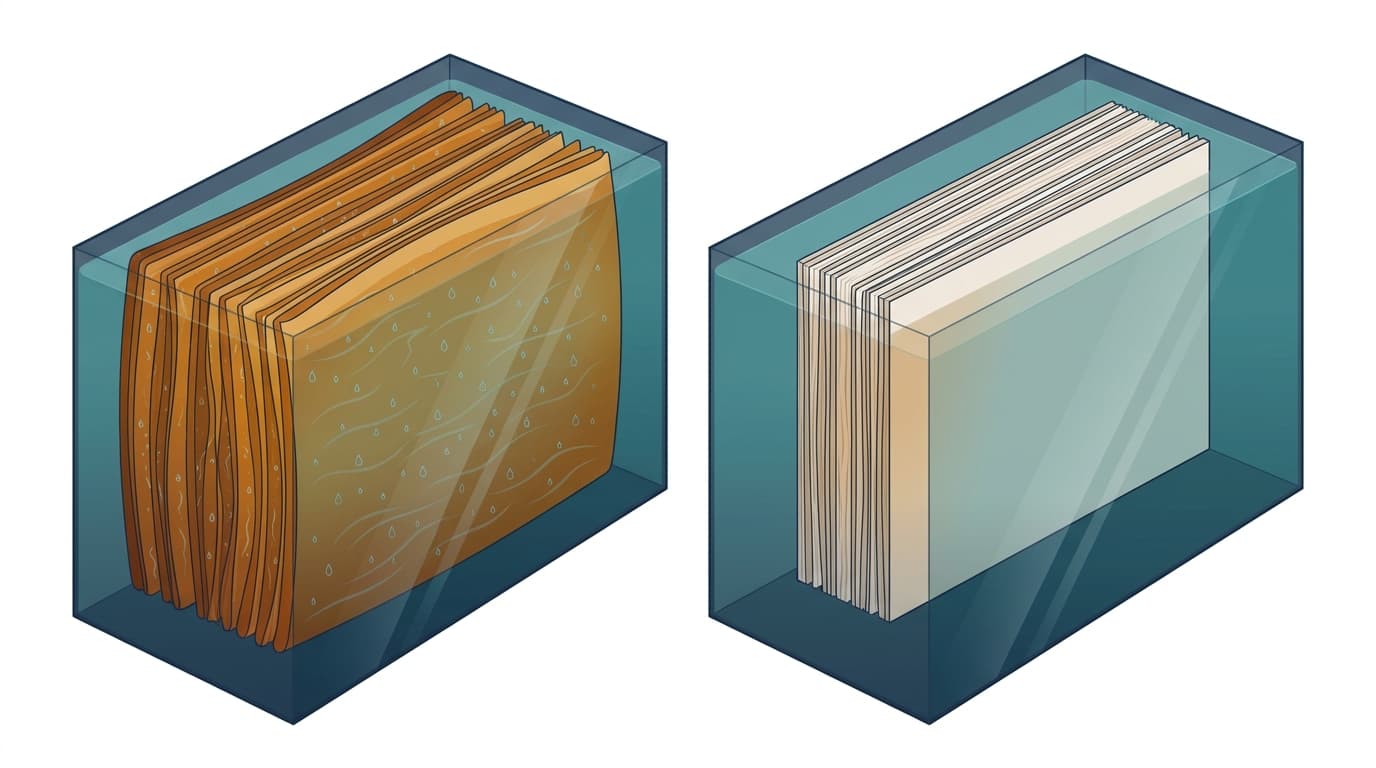
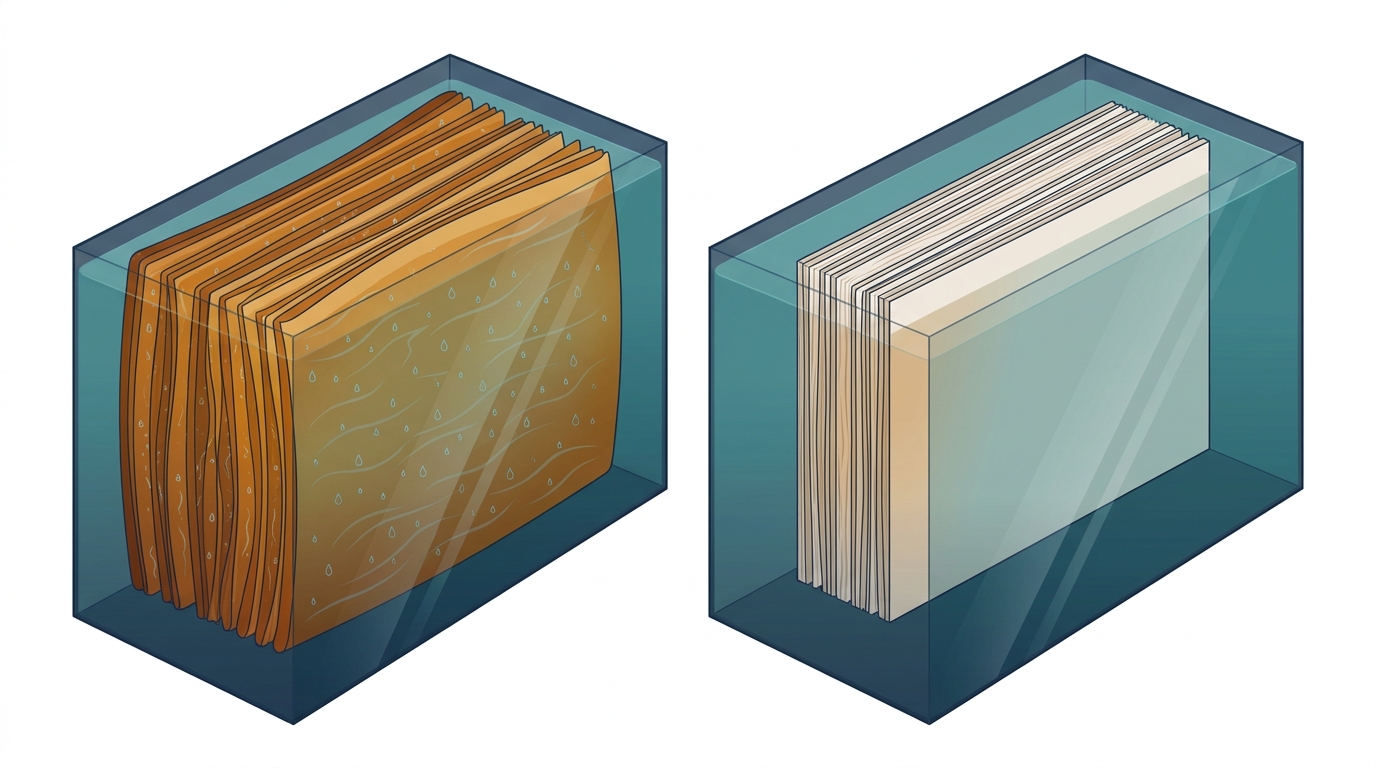
Drying removes water. It does not reverse ageing. The degree of polymerisation of the cellulose — the measure of its mechanical strength — is not restored by drying. The chain scissions that already lowered it are permanent. A dried transformer has exactly the same mechanical age as before; it is simply no longer being aged as fast by the water you removed.
If the paper is already near the end of its mechanical life, drying will not give you a new transformer — it will slow the last of the decline. That is still worth doing on the right asset, but it should be decided with eyes open, not sold as rejuvenation.
There is a second honest limit, and it is mechanical rather than chemical. Wet paper is slightly swollen — the cellulose has taken up water and grown around it — so drying shrinks it back, and on a clamped winding part of that shrinkage never fully recovers. Recent CIGRE work on the mechanical behaviour of aged cellulose (CIGRE TB 967) describes exactly this: the winding can end up a little looser than it was, which modestly reduces its mechanical grip and its margin against the forces of a through-fault or short circuit. The effect is not dramatic, but it is the strongest reason to dry to the factory condition and no further — over-drying only adds to it. It is also why a dry-out is a considered decision rather than a free tune-up: even done well, it spends a little mechanical margin to buy back the dielectric and ageing benefits above.
The Methods, at a Glance
You do not need to specify the process to make the decision, but it helps to know roughly what is on the table and how long each takes.
- Oil processing (vacuum dehydration and degassing). The workhorse. Hot oil is circulated through a vacuum plant that strips water and gas. Fast on the oil, hours to a pass — but on its own it only dries the paper slowly, as the paper equilibrates outward.
- Hot-oil circulation and hot-oil spray. Heated oil is circulated or sprayed onto the active part under vacuum. Slower than the vacuum methods; usually a supporting step rather than the whole job.
- Tank vacuum drying / vacuum reprocessing. The core field method for large and higher-voltage units: heat, then deep vacuum, held for anything from around half a day on a small unit to several days on the largest classes.
- Vapour-phase drying (VPD). The factory and major-overhaul reference process — deep, uniform, and thorough, but a works or mobile-site operation, not a routine field method.
- Low-frequency heating (LFH), on-site. The modern choice for a wet large unit that cannot go to a works. It heats the winding from the inside and can bring cellulose moisture below 1 % over a series of heat-and-vacuum cycles — typically a matter of days.
- Online / adsorbent drying. Molecular-sieve or vacuum-dehydration units that keep the transformer energised. A slow, in-service life-extension measure that removes water from the oil while the paper gives it up gradually — not a full dry-out, but the right tool when the unit simply cannot come off.
One caution worth flagging at decision time: ester-filled units are handled differently. Hot-air drying is not acceptable for natural ester, and esters partition water differently from mineral oil — so the method and the endpoint both need to suit the fluid.
How You Know It Worked — and When to Stop
There is no field instrument that reads the average moisture of the whole insulation structure directly, so dryness is inferred from a convergent set of indicators:
- Dew point in the gas space, converted to a surface-moisture estimate — the first-line field check.
- The extracted-water rate. Weighing the condensate collected over successive periods shows when the water is no longer coming out fast enough to be worth continuing. Drying is stopped when the rate becomes uneconomic, not when the paper is bone-dry — over-drying shrinks and loosens the insulation, so the target is the factory condition, not zero.
- Karl Fischer on a paper sample, where one can be taken.
- Dielectric response and dissipation factor (DFR / tan-δ) and insulation power factor — the whole-system, paper-side assessment, and the one we lean on most for a verdict. During a dry-out the insulation power factor rises, then falls, then flattens; the flat value marks the maximum dryness obtainable for that system. Final acceptance is a power-factor test — broadly under 0.5 % for a new mineral-oil unit and under 1 % for an ester-immersed one, or the manufacturer's figure. For the difference between what the oil sample and the whole insulation are telling you here, see our note on the dissipation factor of oil versus the transformer.
And then the discipline that ties the whole decision together: re-sample a few months after the unit is back in warm service. That is the sample that tells you whether you dried the transformer or only dried the oil.
The Decision, in One Line
Dry when the evidence points to wet paper, not just wet oil, and when the asset has enough remaining value that slowing its ageing and buying back dielectric and overload margin is worth the outage and the cost. Do not commission a dry-out expecting it to undo age — it will not. On a young, wet unit that is a straightforward yes. On an old, wet one it is a judgment call about how much life is left to protect.
Talk to TriboTech
If a water result or a falling BDV has put the drying question on your desk, the useful next step is usually not to book a drying truck — it is to work out whether the paper is actually wet and whether this particular asset is worth drying. We read the moisture picture across the oil and the solid insulation, tell you in plain language what drying would and would not buy you on your unit, and check the result the right way once it is done. Get in touch to talk it through.
Frequently asked questions
Does drying a transformer reverse ageing or restore the paper?
Does drying the oil dry the whole transformer?
How long does transformer drying take?
Can a transformer be dried on site, or does it have to go to a works?
Can over-drying damage a transformer?
How do you know when a transformer is dry enough?
Standards referenced
The methods on this page are anchored in these standards — follow each into our standards library.
Put Theory into Practice
Try our interactive Duval diagnostic tools or use our new unified workflow to analyze your transformer oil data.