
Audio player docked to bottom
Listen to this article
Executive Summary
Mineral oil is the foundation of the transformer industry, and for many assets it remains the right fluid. Ester-based fluids are a strong choice where fire safety, environmental sensitivity or moisture tolerance weigh heavily; mineral oil keeps its advantages in viscosity, purchase price and, against natural esters, oxidation stability. This whitepaper sets out the chemistry, standards and degradation mechanisms behind that choice, so each asset owner can decide where each fluid fits over a service life of several decades.
Transformer oil is far more than a passive liquid inside a metal tank. It is the transformer's dynamic immune system — a precision-formulated, continuously interacting chemical machinery that governs thermal convection, dielectric integrity, and the preservation of cellulose insulation.
This whitepaper is a technical analysis of transformer insulating fluids for engineers, asset managers, and specialists working on operations, safety, and the green transition in high-voltage installations. We cover:
- Historical evolution — from the first oil-filled transformers of the late 1880s to GTL oils and nanofluid research
- Molecular chemistry — naphthenes, paraffins, aromatics, esters, and silicones
- Refining processes — solvent extraction, hydroprocessing, and clay treatment
- International standards — IEC 60296 Ed. 5, ASTM D3487, IEC 62770, and IEC 61099
- Additive technology — oxidation inhibitors, metal passivators, and pour point depressants
- Degradation mechanisms — the triad of aging, DGA, and furan analysis
- Environmental regulation — PCB phase-out, REACH, and waste management legislation
- Fluid selection — what drives the choice between mineral oil and esters
❗ Important
Transformer oil does not merely determine day-to-day operating performance — it shapes the life of the insulation system. A fluid selection based on lifecycle economics rather than unit cost is one of the levers that decide how long the insulation system lasts. See Section 9 for what drives the choice — and contact TriboTech if you want to discuss it for your own fleet.
1. Introduction: The Lifeblood of Electrical Infrastructure
In the global electrical infrastructure, power and distribution transformers form the very heart of reliable energy transmission and distribution. While the solid components — copper windings, insulation paper, and silicon steel cores — often receive the primary attention, it is the liquid insulation, transformer oil, that constitutes the single most critical working fluid.
Transformer oil serves two fundamental functions:
- Dielectric insulation — delivering extremely high dielectric strength to isolate high-voltage components and prevent catastrophic flashovers or corona discharges
- Thermal cooling — acting as a high-efficiency convection medium that absorbs and conducts intense heat away from the core and windings to external cooling radiators
Beyond these fundamental physical and electrical properties, modern transformer oil functions as a chemical messenger and diagnostic instrument that, through advanced analysis, continuously reflects the transformer's internal health.
The constant evolution of high-voltage technology, combined with a global agenda centred on sustainability, decarbonisation, and increasingly stringent environmental legislation, has driven transformer fluid technology from simple petroleum derivatives to highly specialised, chemically engineered fluids.
This whitepaper sets out where the ester alternative is stronger — in fire safety, biodegradability and, in some applications, lifecycle cost — and where mineral oil remains the better fit.
2. Historical Evolution
A short history is enough to explain where today's fluid families come from.
2.1. Oil-Filled Transformers and the First Dielectric Liquids
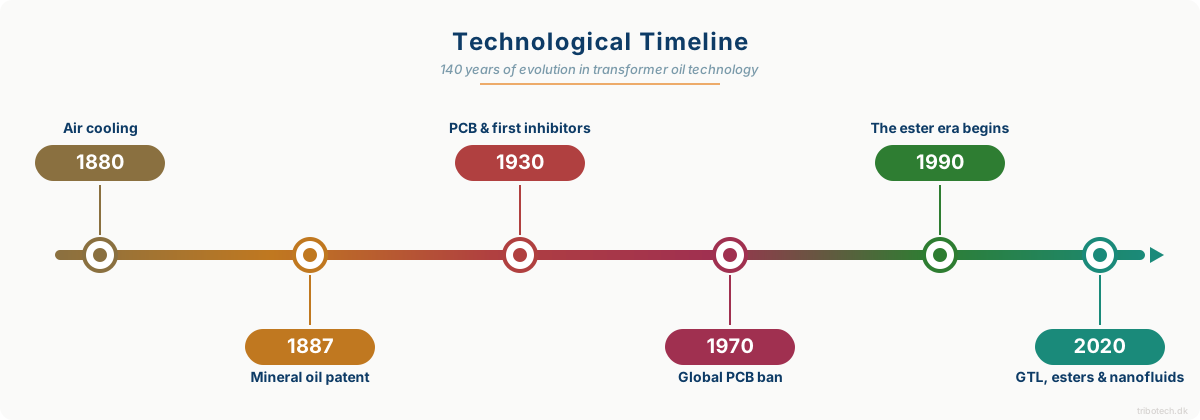
Oil-filled transformers date from the late 1880s, and natural esters were among the first liquids used (CIGRE TB 436:2010, Cl. 1). Mineral oils gradually replaced the early natural-ester dielectrics, which proved incompatible with free-breathing equipment (CIGRE TB 436:2010, Cl. 1).
2.2. The PCB Era
PCBs combined good thermal and electrical properties with excellent chemical stability (IEC 60422:2024, 7.18) and did not burn, which made them attractive for indoor use.
🔴 Caution
PCBs proved to be highly bioaccumulative and a persistent environmental toxin that, when burned, degrades into even more hazardous dioxins and furans. Their use was progressively restricted from the early 1970s, and their use in new plant and equipment was banned by international agreement in 1986 (IEC 60422:2024, 7.18). The EU phase-out is tiered: large equipment (> 5 dm³) was due for disposal by end-2010 (Directive 96/59/EC, Art. 3), while equipment with > 0.005 % PCB and > 0.05 dm³ must be removed from use by 31 December 2025 (POPs Regulation (EU) 2019/1021, Annex I).
2.3. The Return of Esters
Silicone and synthetic ester liquids had been in successful service for almost 40 years when CIGRE TB 436 was published in 2010. Natural esters saw a resurgence in the decade before it, driven by environmental awareness and regulation (CIGRE TB 436:2010, Cl. 1).
Alongside conventional mineral oil, four developments shape today's fluid choices:
- Natural esters — bio-based fluids derived from soybean, rapeseed, and sunflower oils
- Synthetic esters — chemically engineered fluids that oxidise only very slowly
- GTL technology — Gas-to-Liquids base oils synthesised from natural gas (Section 2.4)
- Nanofluids — early research into nanoparticle-enhanced oils
2.4. GTL Technology
GTL base oils are synthesised from natural-gas-derived syngas and then hydroisomerised into branched isoparaffins. For one GTL-based product, Shell Diala S5 BD, the manufacturer's datasheet reports:
- Sulphur below the 1 mg/kg detection limit of ASTM D5185
- High compositional consistency
2.5. Nanofluids
Nanofluids — colloidal suspensions of nanoparticles in transformer oils — remain a research topic. Laboratory studies report improvements in breakdown strength and heat transfer; none has reached a product standard.
ℹ️ Note
The open barriers include long-term suspension stability, cellulose interaction, the absence of IEC/ASTM standards, uncertain environmental risk profiles, and industrial scalability.
Technological Timeline
3. Oil Chemistry and Molecular Composition
To select the correct transformer fluid for a specific application, it is essential to understand the underlying chemistry of the three primary fluid families: mineral oils, ester-based fluids, and silicone oils. The fluid's chemical structure dictates everything from thermal transfer capacity and cellulose paper interaction to fire safety and environmental persistence.
3.1. Mineral Oils (Petroleum-Based Hydrocarbons)
Mineral oil forms the foundation of the industry. Chemically, it consists of complex hydrocarbon molecules, divided into three structural categories:
Naphthenes (Cycloparaffins)
Naphthenic hydrocarbons typically constitute the primary component in high-quality transformer oils. Molecularly, they consist of saturated carbon rings (monocyclic CₙH₂ₙ or polycyclic structures such as decalin). Naphthenic oils are those with less than 50 % of their carbon atoms in paraffinic structures (CIGRE TB 526:2013, 2.3).
Key advantages:
- Completely wax-free → low natural pour point: typical values down to −50 °C; the specification limit is −40 °C (IEC 60296:2020, Table 3)
- Excellent low-temperature viscosity → maintains critical thermal convection even in severe cold
- High solvency → keeps oxidation by-products (acids and varnish) dissolved, preventing sludge deposition on cooling channels and copper windings
Paraffins
Paraffins are straight, saturated carbon chains (CₙH₂ₙ₊₂). Paraffins give a high viscosity index and a lower density, but paraffinic oils precipitate oxidation products earlier as sludge and have shown higher acidity and sludge formation than naphthenic oils under ageing (CIGRE TB 526:2013, 2.3). Long-chain paraffins also crystallise and form wax at low temperatures.
Isoparaffins vs. normal paraffins: Long-chain normal paraffins crystallise; branched isoparaffins pack less readily and lower the pour point. GTL oils, being isoparaffin-dominant, reach pour points as low as −51 °C (typical value, Shell Diala S5 BD datasheet).
💡 Tip
Shell's datasheet for its GTL-based Diala S5 BD reports, after the 500 h IEC 61125 test at 120 °C, total acidity 0.02 mg KOH/g, sludge 0.02 % and DDF 0.02, against Type A limits of 0.3 mg KOH/g, 0.05 % and 0.050 (IEC 60296:2020, Table 3).
Aromatics
Aromatic hydrocarbons (benzene derivatives) present a technical paradox:
- Disadvantage: High aromatic content reduces oxidation resistance, as unsaturated bonds react more readily with oxygen
- Advantage: Some aromatic molecules absorb hydrogen under electrical stress, so the oil's gassing tendency is related to its aromatic content (IEC 60296:2020, 7.3)
IEC 60296 limits the polycyclic aromatic (PCA) content, measured by the DMSO-extraction method IP 346, to below 3 % (IEC 60296:2020, 6.15 and Table 3). A low gassing tendency is preferred by some users for special equipment such as HV instrument transformers and bushings; it is agreed between purchaser and supplier rather than required by the specification (IEC 60296:2020, 7.3).
3.2. Ester-Based Fluids
Esters are formed through a condensation reaction between an acid and an alcohol.
Natural Esters (Vegetable Oils)
Natural esters are derived from soybeans, sunflower seeds, or rapeseed oil. They are composed of triglycerides (esters of organic fatty acids and glycerol).
Advantages:
- High fire point: at least 300 °C by specification (IEC 62770:2024, Table 2), which places natural esters in fire class K (IEC 61039:2025, 5.3), i.e. a less-flammable liquid that substantially reduces fire risk
- Readily biodegradable according to OECD 301 B, C or F (IEC 62770:2024, Table 2)
- Based on edible vegetable oils; the environmental and health profile of the finished fluid also depends on its additives (IEEE C57.147-2018, C.2; superseded by IEEE C57.166-2026)
- High water solubility, and hydrolysis of the ester, which consumes water, are thought to slow paper ageing; trans-esterification has also been proposed. Studies suggest paper ages more slowly in ester liquids (CIGRE TB 738:2018, 3.5.1)
Limitations:
- High viscosity: about four times more viscous than mineral oil at 40 °C (36 against 9 mm²/s for FR3), narrowing to about three times at 100 °C (8 against 2.6 mm²/s) (CIGRE TB 436:2010, Table 3.2)
- Vulnerable to free oxygen — double bonds in the fatty acids oxidise and polymerise when exposed to atmospheric air
- Primarily suited to hermetically sealed transformer designs
❗ Important
Oxidation stability depends strongly on fatty-acid unsaturation. Relative oxidation rates reported in the literature are 1 for oleates, 41 for linoleates and 98 for linolenates (CIGRE TB 526:2013). Small amounts of polyunsaturated fatty acids have a disproportionately strong effect on oxidation stability (CIGRE TB 526:2013), which is one reason natural esters belong in sealed designs.
Synthetic Esters
Synthetic esters (typically pentaerythritol esters) are produced through controlled chemical synthesis. The chemical architecture is built on the pentaerythritol core — C(CH₂OH)₄ — with four tetrahedrally arranged arms, esterified with a mixture of monocarboxylic acids.
Saturated acid chains make synthetic esters oxidise only very slowly; they form organic acids but no sludge (CIGRE TB 436:2010). Key properties:
- They can be used to retrofill both free-breathing and sealed units (IEC 61203:2025, Annex B.1)
- Flash point about 275 °C (open cup) and fire point about 316 °C (typical values for MIDEL 7131, manufacturer's selection guide)
- Pour point −56 °C (typical value, same guide)
- Viscosity 28 mm²/s at 40 °C (typical, CIGRE TB 436:2010, Table 3.2)
Synthetic esters are the preferred choice for traction transformers (high-speed rail), compact urban substations, and offshore wind farms.
3.3. Silicone Oils
Silicone oil (polydimethylsiloxane, PDMS) is fundamentally different, built on an inorganic polymer backbone of alternating silicon and oxygen atoms with organic methyl groups.
Properties:
- Very high viscosity index (> 300)
- Very stable against oxidation (CIGRE TB 436:2010, Table 3.1)
- High flash point (> 300 °C; CIGRE TB 436:2010, Table 3.1)
ℹ️ Note
DGA in silicone needs its own interpretation guide and norms, because gases form in different proportions and dissolve differently than in mineral oil (IEEE C57.146-2025, 4.1). Polysiloxanes are also very slow to biodegrade.
4. Refining Processes: From Crude Oil to Dielectric Fluid
The journey from thick, untreated crude oil to a hyper-pure dielectric insulating fluid is one of petrochemistry's most demanding processes. Today, modern transformer oils are produced primarily through two competing technologies.
4.1. Fractionation and Vacuum Distillation
The process begins with desalting and dehydrating the crude oil. It is then pumped into atmospheric and vacuum distillation columns, where it is separated ("fractionated") based on specific boiling points. The relevant fraction (the vacuum cut) contains the appropriate molecular weight for transformer oils, but at this stage remains dark, unstable, and laden with undesirable polar contaminants, acids, and reactive sulphur and nitrogen compounds.
4.2. Solvent Extraction
Solvent extraction is a physical separation process. The untreated distillate is blended with a polar solvent that attracts and binds undesirable polar compounds, heavy aromatics, resins, and colourants.
Advantages: Preserves the oil's natural inhibitors: the refining is optimised to retain sulphur and aromatic compounds that act as natural antioxidants (IEC 60296:2020, 5.1.1). Relatively low energy consumption.
Limitations: As a physical process, the molecular structure is not altered. Reactive sulphur compounds and unsaturated hydrocarbons remain reactive.
4.3. Catalytic Hydroprocessing (Severe Hydrotreating)
Hydroprocessing is a chemical process: the oil is treated with hydrogen at high pressure over a catalyst; the severity depends on hydrogen pressure, catalyst, temperature and residence time (CIGRE TB 526:2013).
⚠️ Warning
Severe hydroprocessing is so effective that it eliminates virtually all of the oil's natural antioxidants and gas-absorbing aromatics. Heavily hydrotreated mineral oils are therefore critically dependent on subsequent formulation with synthetic inhibitors.
4.4. Polishing: Clay Treatment and Dehydration
As the final step, the oil undergoes polishing through adsorption columns of activated clay (Fuller's earth). The clay absorbs polar contaminants, residual moisture, and the last acidic by-products. The oil is then passed through a vacuum dehydration system that reduces moisture content to within the delivery limit of 30 mg/kg for bulk supply (40 mg/kg in drums and IBCs) (IEC 60296:2020, Table 3) and removes entrained gases.
Comparison of Refining Methods
| Method | Mechanism | Advantages | Disadvantages |
|---|---|---|---|
| Solvent Extraction | Physical separation using polar solvent | Preserves natural antioxidants. Low energy consumption | Reactive molecules (sulphur) remain reactive. Lower purity |
| Severe Hydrotreating | Chemical process using hydrogen, heat, and catalyst | Removes most polyaromatics, aromatics and heteroatom compounds | Also removes the natural antioxidants; requires synthetic antioxidant |
| Clay Treatment | Adsorption via heated, activated clay | Effective removal of polar compounds, colour, and acids. Inexpensive | Does not remove unsaturated compounds. Requires disposal of spent clay |
5. International Standards and Classifications
High-voltage transformers are vital assets expected to operate without interruption for decades. The production, procurement, and quality assurance of transformer oils are governed by international specifications. For unused mineral insulating oil, the two main ones are IEC 60296 and ASTM D3487.
5.1. IEC 60296 (Edition 5.0, 2020)
The fifth edition defines two groups, Type A and Type B, based on their performance under accelerated oxidation (IEC 60296:2020, Foreword). The designation code still declares whether an oil is unused or recycled.
Performance Categories
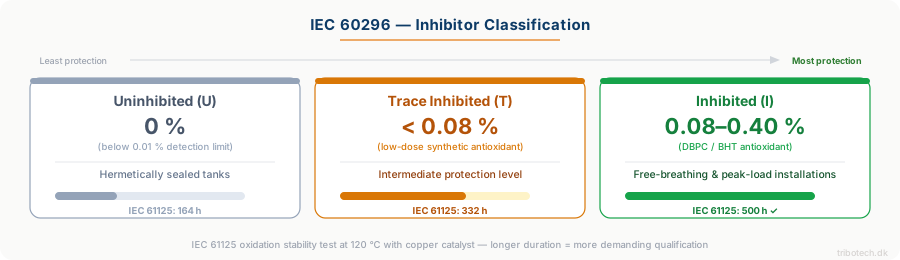
- Type A — fully inhibited high-grade oils with higher oxidation stability than Type B. Requires ≤ 0.05% total sulphur, IFT ≥ 43 mN/m, inhibitor content 0.08–0.40%, and a passed 500-hour oxidation stability test (IEC 60296:2020, Table 3)
- Type B — standard-grade oils, uninhibited (U), trace-inhibited (T) or inhibited (I). The after-oxidation limits are several times wider than for Type A (acidity 1.2 against 0.3 mg KOH/g; sludge 0.8 % against 0.05 %), the IFT minimum is 40 rather than 43 mN/m, and there is no total-sulphur or stray-gassing requirement (IEC 60296:2020, Tables 3 and 4)
Inhibitor Classification
💡 Tip
Within Type B, IEC 61125 tests uninhibited oil for 164 hours, trace-inhibited for 332 hours, and inhibited for 500 hours — all against the same limits; Type A (500 hours) has much tighter limits (IEC 60296:2020, Tables 3 and 4). The ASTM counterparts for insulating oil are ASTM D2440 (acid-sludge test, 72 h and 164 h) and, for inhibited Type II oil, ASTM D2112 (pressure-vessel test, min. 195 minutes), as required by ASTM D3487-25, Table 1. ASTM D943 and D2272 are turbine-oil tests.
5.2. ASTM D3487
ASTM D3487 defines two types:
- Type I — for apparatus where normal oxidation resistance is required; inhibitor content max. 0.08 % by mass, and a fully uninhibited liquid is supplied only by agreement (ASTM D3487-25)
- Type II — for apparatus where greater oxidation resistance is required; inhibitor max. 0.30 % by mass (2,6-di-tert-butyl-para-cresol or 2,6-di-tert-butylphenol)
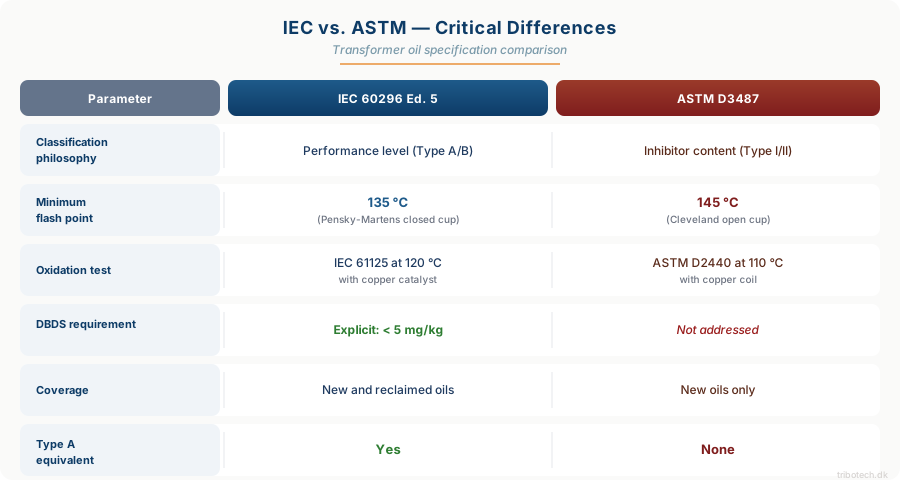
Critical Differences Between IEC and ASTM
❗ Important
IEC and ASTM inhibitor classifications are not compatible. IEC Uninhibited (U) means synthetic antioxidant below the 0.01 % detection limit; ASTM Type I permits up to 0.08%. An ASTM Type I oil with 0.05% inhibitor would be classified as IEC Trace Inhibited (T), not Uninhibited.
5.3. Standards for Alternative Fluids
- IEC 62770:2024 and IEEE C57.166-2026 — cover natural esters (vegetable oils): IEC 62770:2024 Table 2 sets fire point ≥ 300 °C and flash point ≥ 250 °C, with biodegradability requirements, acceptable moisture content, and viscosity. ASTM D6871-17 was withdrawn in January 2026 and reinstated in July 2026 as ASTM D6871-26 (approved 1 June 2026), again the current US as-received specification. IEEE C57.166-2026, which supersedes IEEE C57.147-2018, is the acceptance-and-maintenance guide: its §7.1 requires unused natural ester as delivered to conform to ASTM D6871, and its Table 2 gives suggested test limits for shipments as received from the liquid supplier.
- IEC 61099 — specifications for unused synthetic organic esters for electrical purposes
6. Additive Technology: Chemistry and Function
Modern transformers are driven significantly harder at elevated operating temperatures, while severe hydroprocessing strips away the oil's natural chemical defences. To survive decades of service, mineral oils are formulated with chemical additives — typically from a few ppm to 0.4% by weight.
6.1. Oxidation Inhibitors (Antioxidants)
Heat and atmospheric oxygen initiate an autocatalytic chain reaction via aggressive free radicals that degrade the hydrocarbons and produce acids, alcohols, aldehydes, and sludge.
The most prominent inhibitors are:
- 2,6-di-tert-butyl-para-cresol (DBPC)
- 2,6-di-tert-butyl-phenol (DBP)
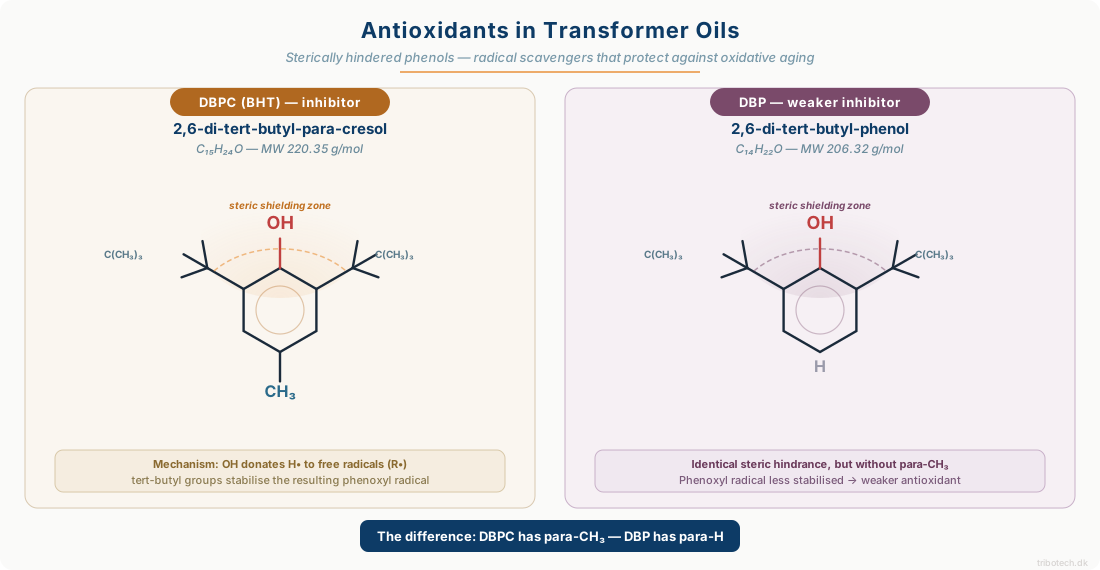
These function as radical scavengers, protected by steric hindrance. DBPC gives up the hydrogen atom of its hydroxyl group to a radical, which terminates that radical; the phenolic radical left behind is highly stabilised and can terminate a second radical (CIGRE TB 526:2013, 3.4). A single DBPC molecule can terminate at least two radicals before it is consumed.
❗ Important
IEC 60422:2024 (Table 5) grades inhibitor content against the oil's original value: above 60 % is good, 40–60 % fair, below 40 % poor. At fair or poor, sampling becomes more frequent.
IEC 60422:2024 allows re-inhibition to the original baseline level, without reclaiming, while acidity is at most 0.08 mg KOH/g and IFT at least 28 mN/m. Beyond that, re-inhibition is not effective and reclaiming or an oil change is to be considered (Table 5). After reclamation, adding inhibitor is strongly recommended (IEC 60422:2024, 14.4.4).
6.2. Metal Passivators
Copper in transformer windings acts as a potent chemical catalyst for oil oxidation. Even more dangerous is corrosive sulphur — reactive sulphur compounds that attack copper at elevated operating temperatures and form electrically conductive copper sulphide (Cu₂S) directly on the conductor surface.
Metal passivators are benzotriazole derivatives: N-bis(2-ethylhexyl)-aminomethyl-tolutriazole (TTAA, of which Irgamet 39 is a commercial example), benzotriazole (BTA) or 5-methyl-1H-benzotriazole (TTA) (IEC 60422:2024, 7.20). They form a monomolecular layer, around 2 nm thick, on bare copper (CIGRE TB 625:2015, 4.1.2). The typical dose is 100 mg/kg (IEC 60422:2024, 7.20; CIGRE TB 625:2015, 4.1.2). Below 50 mg/kg a passivator is considered ineffective (CIGRE TB 625:2015, 4.1.2); IEC 60422:2024, Table 5, rates content below 50 mg/kg as poor, and one short-term option there is a top-up with new passivator to ≤ 100 mg/kg.
For an in-depth analysis of corrosive sulphur, see our dedicated whitepaper on corrosive sulphur.
6.3. Pour Point Depressants (PPDs)
In paraffinic mineral oils, long-chain alkanes crystallise in the cold and form a wax network that solidifies the oil; paraffinic oils have pour points of about −10 to −20 °C, depending on the degree of dewaxing (CIGRE TB 526:2013, 2.3). PPDs — typically polymethacrylates or polynaphthalenes (IEC 60296:2020, 6.12.4) — alter the physical morphology of wax crystals during cooling: they reduce crystal size and prevent lattice formation.
Paraffinic oils sometimes need a pour point depressant to meet the low-temperature requirement (CIGRE TB 526:2013, 2.3).
7. Degradation Mechanisms, Service Life, and Diagnostics
A transformer's primary cause of death is rarely an isolated collapse of the oil — it is the degradation of the cellulose (insulation paper) that marks the end of the asset's service life. Unlike the oil, the paper cannot be regenerated or replaced without rewinding.
Under optimal conditions, a mineral-oil-filled transformer can deliver several decades of trouble-free operation. However, oil and paper function as an integrated, interacting ecosystem.
7.1. The Triad of Aging
Three destructive forces drive degradation:
1. Thermal stress (overheating)
Paper life roughly halves for every 6–10 °C increase in hot-spot temperature, depending on the material; the reference hot spot is 98 °C for normal kraft and 110 °C for thermally upgraded paper (CIGRE TB 738:2018). The IEC loading guide, IEC 60076-7:2018, uses a 6 °C doubling referred to 98 °C, i.e. for normal (non-upgraded) kraft paper (as quoted in CIGRE TB 738:2018, eq. 14). IEEE Std C57.91-2025 (5.2, Eq. 5) defines the aging acceleration factor , referred to a 110 °C winding hottest spot for 65 °C-rise insulation (95 °C for 55 °C-rise). Its annex notes that the Arrhenius curve corresponds to a doubling every ~6 °C between 100 and 110 °C and ~8 °C above 120 °C.
2. Oxidation
The combination of heat and oxygen degrades hydrocarbons into peroxides, ketones, and organic acids.
3. Moisture (moisture ingress)
Water is the transformer's hidden enemy. It enters via failed gaskets or arises chemically from within as a by-product of cellulose paper degradation. For kraft paper, the ageing rate roughly doubles for each additional percent of water in the paper (CIGRE TB 738:2018, Executive Summary).
The Vicious Cycle
These factors reinforce each other:
- Thermal stress + oxygen → oxidation of the oil → aggressive acids and insoluble sludge
- Sludge deposits on metal surfaces → blocks cooling channels in the windings
- Blockage → uncontrolled localised heating (hotspots)
- Elevated temperature → accelerated cellulose degradation → release of water and furans
- Water lowers dielectric strength and, together with acids, drives acid-catalysed hydrolysis of the paper (CIGRE TB 738:2018)
- The cycle closes and reinforces itself
7.2. Diagnostic Indicators
Since cellulose condition cannot be physically inspected on energised assets, the oil is used as an informative messenger.
Dissolved Gas Analysis (DGA)
Different types of electrical or thermal faults break hydrocarbon chains and release gases with specific fingerprints:
- Ethylene (C₂H₄) — indicates severe general overheating
- Acetylene (C₂H₂) — critical warning of high-voltage arcing
- Hydrogen (H₂) — partial discharges
- Methane (CH₄) and Ethane (C₂H₆) — thermal degradation at lower temperatures
💡 Tip
TriboTech's free online Duval Triangle diagnostic tool and Duval Pentagon tool can classify DGA results using the zone geometry published in IEEE C57.104-2019 and IEC 60599.
IEEE C57.104-2019 status classification:
- Status 1 — all gases below the 90th-percentile levels (Table 1) and no sign of gassing
- Status 2 — a gas between the 90th and 95th percentiles, or a confirmed increase above the Table 3 delta norms
- Status 3 — a gas above the 95th percentile (Table 2) or a rate above Table 4: increased surveillance, further testing and expert consultation (IEEE C57.104-2019, 6.1)
In IEEE C57.104-2019 the 95th-percentile acetylene levels are 2–7 µL/L (Table 2), and any increase between consecutive samples exceeds the delta norm (Table 3).
Furan Analysis (2-FAL)
Furan analysis gives an indirect indication of the paper's condition. When cellulose depolymerises, it releases oil-soluble furan compounds — including 2-furaldehyde (2-FAL) and 5-hydroxymethyl-2-furaldehyde. They are measured by HPLC (IEC 61198) and reported in ppm:
| 2-FAL Concentration | Estimated DP |
|---|---|
| > 2 ppm | below about 400 |
| > 5 ppm | below about 200 |
| > 10 ppm | below about 100 |
Below 1 ppm the correlation is not reliable, and in normal ageing such values correspond to DP above 400 (Duval et al., IEEE EIM 2017, Table 3).
These DP bands are approximate: furan-to-DP correlations are model- and paper-type-dependent (e.g. De Pablo, Pahlavanpour), thermally-upgraded paper produces less furan per unit of DP loss, and furan alone should not drive a de-energize decision (IEEE C57.140-2017, Cl. 5.4.3).
For a deeper analysis of DP end-of-life assessment, see our article on rethinking DP end-of-life.
Ester Retrofilling
Retrofilling with natural ester (FR3, MIDEL eN 1215) offers:
- Fire point ≈ 360 °C, flash point ≈ 330 °C (FR3 typical values; ≈ 2× that of mineral oil) — K-class classification is gated on fire point ≥ 300 °C, per IEC 61039:2025, Cl. 5.3
- Readily biodegradable (OECD 301; IEC 62770:2024, Table 2)
- High water solubility — some 20 to 50 times that of mineral oil (CIGRE TB 738:2018); at 23 °C about 1100 ppm for natural ester against 55 ppm for mineral oil (CIGRE TB 436:2010, Table 3.3)
ℹ️ Note
IEEE Std C57.154-2022, Tables 2–3, permits hottest-spot rises of +10 to +60 °C above the 80 °C conventional limit, in essentially oxygen-free applications, when the insulation system (solid + liquid + thermal design) is qualified for high-temperature operation. In such a qualified system the ester liquid allows higher operating temperatures; that margin can be used for loading or for insulation life, not both. Retrofilling a transformer originally rated for mineral-oil temperature limits does not on its own unlock this headroom — the winding hot-spot design, conductor insulation class, and thermal-management system must also be compatible.
⚠️ Warning
Retrofill threshold depends on ester chemistry. The residual mineral-oil ceiling is not a single number — it is set by the fire-point performance of the replacement fluid:
- Synthetic ester (MIDEL 7131): the permissible residual mineral oil is determined case by case, not by a single universal ceiling. IEC 61203:2025 Annex B.1 identifies ~3.5 % by volume as the level above which the mixture's fire point can fall below 300 °C — losing K-class — so it serves as practical guidance rather than a hard limit.
- Natural ester (MIDEL eN 1204/1215, Envirotemp FR3): residual mineral oil should stay below approximately 7.5 % by volume, the level above which the fire point may fall below 300 °C (IEC 62975:2021, Annex B.1; IEEE C57.166-2026, Annex A.3; both informative). IEC 62975 advises consulting the transformer manufacturer and the liquid producer, and Cargill gives 7 % for FR3 (FR3 S10 storage and handling guide, 2023).
The FR3 manufacturer reports that, with proper retrofilling, residual mineral oil typically stays at or below 4–5 % in power and 5–6 % in distribution transformers. A retrofill specification that quotes a single "7–8 %" ceiling is inadequate for synthetic ester, and its upper end already exceeds the natural-ester guidance. See Fire point and the less-flammable ester transformer for the retrofill ceilings and the standards behind them.
8. Environmental Impact, Health Risks, and Regulatory Framework
Transformer oil presents documented environmental and health risks at every stage of its lifecycle. Used-oil management is regulated; see, for example, US EPA's used-oil management framework (40 CFR Part 279). The oil's persistent nature forms a suffocating film on surface water that depletes oxygen for aquatic ecosystems.
8.1. The Legacy of PCBs
PCBs are persistent organic pollutants (POPs), strongly suspected carcinogens, and capable of bioaccumulation in the food chain. Their use was progressively restricted from the early 1970s, and their use in new plant and equipment was banned by international agreement in 1986 (IEC 60422:2024, 7.18), but asset management still requires vigilance.
The EU framework is tiered rather than a single phase-out date. Larger equipment (> 5 dm³) was already due for disposal by end-2010, and Directive 96/59/EC also sets the 500 mg/kg (0.05 %) decontamination trigger (Art. 9(1)) and the 5 dm³ inventory and labelling threshold (Art. 4). The EU POPs Regulation (EU 2019/1021), Annex I, then sets 31 December 2025 as the deadline by which asset owners must have identified and removed equipment containing PCB > 0.005 % (50 ppm) in volumes > 0.05 litres. Nordic countries — including Denmark, where TriboTech is based — have traditionally enforced even stricter measures through their national environmental agencies.
8.2. Regulatory Requirements: REACH, Waste Codes, and Compliance
Across Europe, the production and use of transformer oil additives is monitored under REACH (Registration, Evaluation, Authorisation and Restriction of Chemicals). The regulation obliges producers to document chemical risk and long-term environmental effects.
When the oil reaches the end of its service life, it is classified as Hazardous Waste under the European List of Waste (LoW), as implemented in Denmark by the waste order's Annex 2:
| LoW Code | Description |
|---|---|
| 13 03 01 | insulating or heat transmission oils containing PCBs |
| 13 03 07 | mineral-based non-chlorinated insulating and heat transmission oils |
| 15 01 10 | packaging containing residues of or contaminated by hazardous substances |
Where the absence of PCB cannot be documented by an analysis, the oil cannot be assigned to 13 03 07 and must be handled under 13 03 01.
Recovery or incineration of the oil may only be carried out by operators with specific environmental permits from the relevant national authority. Destruction typically involves high-temperature incineration or advanced vacuum distillation technologies designed to recover the fluid for reuse in accordance with circular economy principles.
9. Fluid Selection: What Drives the Choice
There is no single best transformer fluid. The choice between mineral oil and an ester is made per asset, and it turns on the properties set out above:
- Ageing fleets — refurbishment, retrofilling and replacement all reopen the fluid question
- Fire requirements — esters are fire class K liquids (fire point ≥ 300 °C; IEC 61039:2025, 5.3), mineral oil is class O (CIGRE TB 436:2010, Table 3.1). Where fire risk to people, buildings or adjacent equipment is a design constraint, that difference weighs heavily
- Environmental requirements — natural esters are readily biodegradable (IEC 62770:2024, Table 2), mineral oil is slow to biodegrade (CIGRE TB 436:2010, Table 3.1). This matters most where a spill would reach soil or water
- Moisture tolerance — esters dissolve some 20 to 50 times more water than mineral oil (CIGRE TB 738:2018, 3.5.1), and studies suggest paper ages more slowly in them
- Oxidation stability — natural esters oxidise in contact with air and belong in sealed designs (IEEE C57.147-2018, 4.15); synthetic esters can also be used in free-breathing units (IEC 61203:2025, Annex B.1)
- Design constraints — ester viscosity is about four times that of mineral oil at 40 °C (CIGRE TB 436:2010, Table 3.2), which the cooling design has to accommodate
Purchase price per litre is one input, not the decision: the properties above decide what a fluid is worth at a given site.
Within mineral oil, GTL-based grades are one further option. For Shell Diala S5 BD, the manufacturer reports the oil is non-corrosive to copper in DIN 51353, IEC 62535 and ASTM D1275B without passivator.
10. Conclusion
Transformer oil is not a peripheral petroleum product. The fluid is the core's dynamic immune system — it governs thermal convection, dielectric integrity, and the preservation of the cellulose.
For asset owners, two conclusions follow:
Mineral oil defends its position. Highly refined mineral oils meeting IEC 60296 Type A will — by virtue of lower procurement cost and global logistics — remain the most widely deployed medium for large-scale distribution transformers for decades to come.
Ester technology earns its place where its properties count. K-class fire safety, ready biodegradability and moisture tolerance make esters a strong choice where fire risk, environmental sensitivity or paper ageing weigh heavily. In operation that means fire risk is substantially reduced, and a readily biodegradable ester leaves a smaller environmental trace if it is spilled.
TriboTech's role. We do not sell transformer fluids — we analyse them, and we help clients evaluate when ester makes technical and economic sense for their specific application. Where the lifecycle data points clearly in ester's favour, we say so. Where mineral oil remains the better fit, we say that too. The transition decision is the asset owner's; our job is to make sure it is made on the full picture, not on unit cost alone.
💡 Tip
Choosing a fluid, or monitoring the one you have? Contact TriboTech to discuss fluid selection and condition monitoring for your fleet — or start with our diagnostic tools.
References and Further Reading
- IEC 60296:2020 — Fluids for electrotechnical applications — Mineral insulating oils for electrical equipment (Ed. 5.0)
- ASTM D3487-25 — Standard Specification for Mineral Insulating Liquid Used in Electrical Apparatus
- IEC 62770:2024 (Ed. 2.0) — Fluids for electrotechnical applications — Unused natural esters for transformers and similar electrical equipment
- IEC 61099:2010 — Insulating liquids — Specifications for unused synthetic organic esters for electrical purposes
- IEEE C57.104-2019 — Guide for the Interpretation of Gases Generated in Mineral Oil-Immersed Transformers
- IEC 60599:2022 — Mineral oil-filled electrical equipment in service — Guidance on the interpretation of dissolved and free gases analysis
- IEEE C57.637-2015 — Guide for the Reclamation of Mineral Insulating Oil and Criteria for Its Use
- IEC 60422:2024 (Ed. 5.0) — Mineral insulating oils in electrical equipment — Supervision and maintenance guidance
- CIGRE TB 738:2018 — Ageing of Liquid Impregnated Cellulose for Power Transformers (WG D1.53)
- EU POPs Regulation (EU) 2019/1021 — Persistent Organic Pollutants
- REACH Regulation (EC) 1907/2006 — Registration, Evaluation, Authorisation and Restriction of Chemicals
Standards referenced
The methods on this page are anchored in these standards — follow each into our standards library.
Regulatory basis
Official texts (external links)
Put Theory into Practice
Try our interactive Duval diagnostic tools or use our new unified workflow to analyze your transformer oil data.